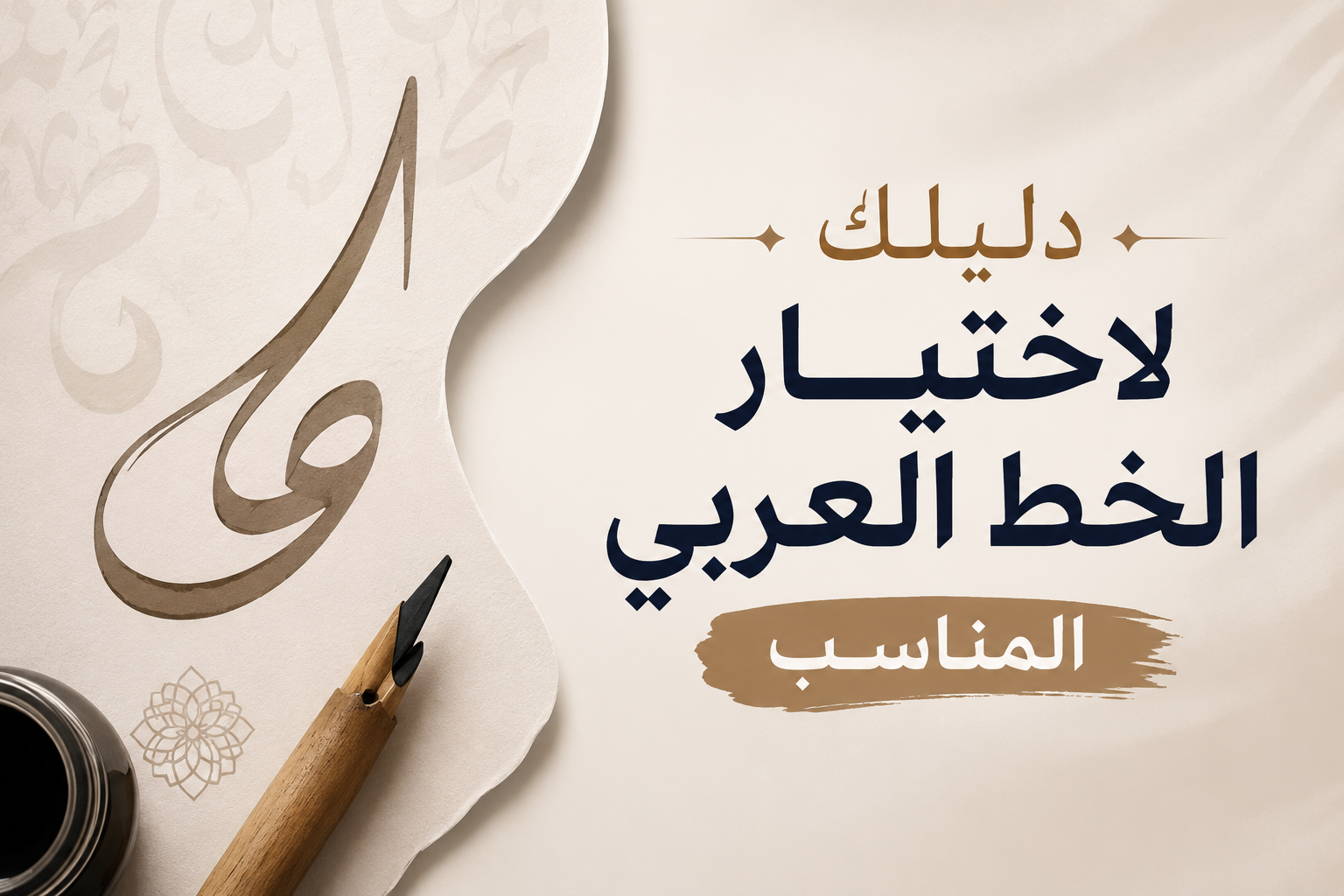
A Practical Guide to Choosing the Right Arabic Typeface
Learn how to choose an Arabic typeface that suits the message, audience, reading length, and personality of your project.
Why the right typeface matters
Arabic typography can change the tone of a message completely. A suitable typeface improves readability and gives the project a coherent visual voice.
Begin with the purpose
Decide whether the type will be used for long paragraphs, headlines, a logo, packaging, or digital interfaces. Reading text needs clarity and comfortable spacing, while display work can support a more expressive style.
Know the main characteristics
- Naskh-inspired typefaces are often effective for books, articles, and interfaces.
- Kufi-inspired typefaces can feel geometric, modern, and structured.
- Thuluth and Diwani styles are expressive choices for ceremonial titles and decorative compositions.
- Ruqah-inspired styles can add an informal and handwritten character.
Test before deciding
Compare the font at several sizes, review all required Arabic letters and numbers, and test it beside the Latin companion font when the identity is bilingual. Always confirm the licence covers the intended use.
A successful choice supports the content instead of competing with it.